

client
Automotive Software
Sector
Automobile
My Role
UI UX Design
Duration
12 months
01.
Intro of case
The Automobile Referal Loyalty platform, an innovative solution for dealerships, offers a turnkey system initiating post-delivery operations. It enhances customer ownership experiences and facilitates systematic revenue-generating loyalty opportunities.
02.
Problem Statement
The primary challenge was to transform the traditional automotive dealership experience, which often lacked comprehensive customer engagement and retention strategies, into a modern and customer-centric model. Our research concluded the following challenges, which laid the guidelines for our project:
03.
Competitive Aanalysis
This analysis converts qualitative strengths/weaknesses into a weighted capability model typical of automotive referral/loyalty platforms. Scores are judgment-based from data brief; weights prioritize UX, personalization, and retention. Use these as a starting baseline for stakeholder workshops and future data calibration.
Areas for Improvement
In conclusion, Client has made significant strides in transforming the automotive dealership industry by focusing on customer loyalty and the ownership experience. While it faces competition from established players, its unique strengths in content-rich resources, personalization, and effective communication channels position it as a formidable contender in the market. Continual innovation and strategic expansion will be key to maintaining and expanding its competitive edge.
04.
User and Audience
Client’s platform serves two key user groups: automotive dealership managers and car owners. Dealership managers focus on how the platform boosts customer loyalty, streamlines operations, and increases revenue through referrals and automation. Car owners, on the other hand, value the personalized ownership experience — gaining easy access to resources, tailored services, and seamless communication with their dealership.
05.
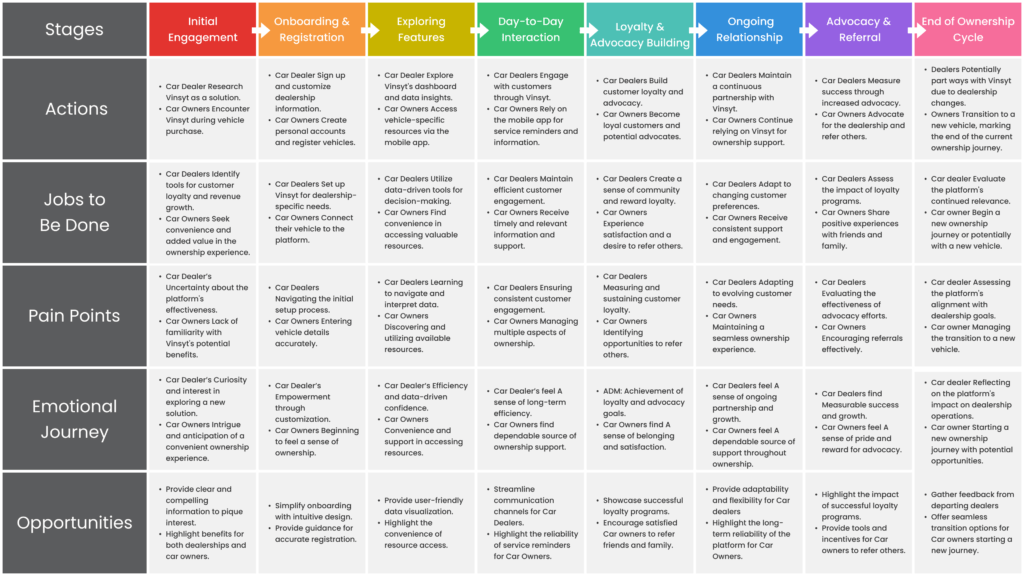
Customer Experience Map -Enhancing Ownership Journey
The Client platform stands as a transformative force, reshaping the way automotive dealership managers (ADMs) and car owners (COs) navigate their respective journeys. This customer experience map offers a comprehensive view of the interactions, emotions, and opportunities that characterize the platform’s experience. From the initial engagement and onboarding stages to the long-term loyalty-building efforts and potential transitions, this map delves into the nuanced landscape of customer engagement. It illuminates the actions, jobs to be done, pain points, emotional arcs, and pivotal opportunities at each stage, painting a vivid picture of how the platform enhances the ownership journey for both ADMs and COs.

06.
07.
08.
Usability Testing
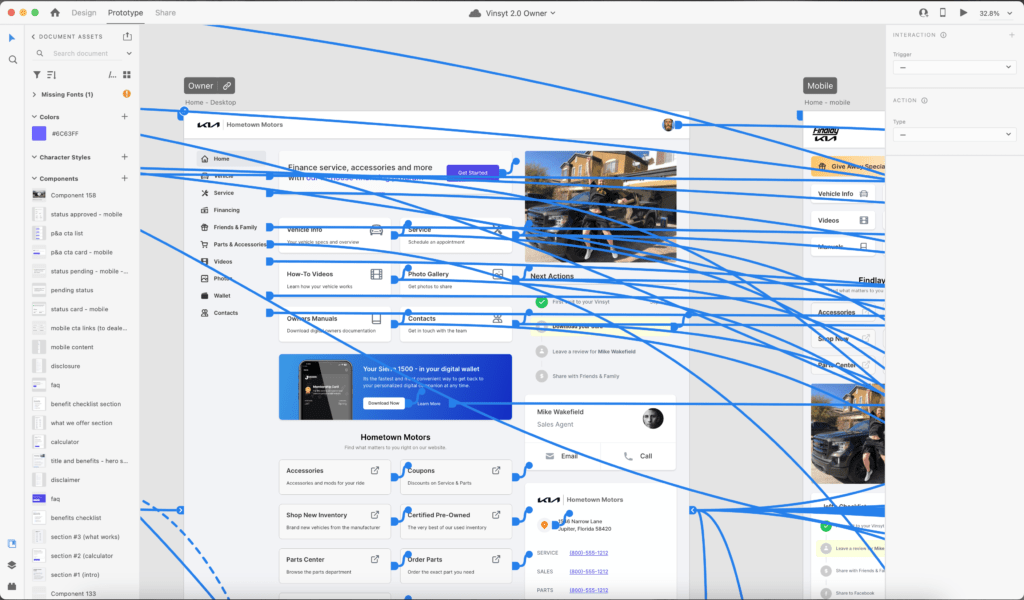
Usability testing was a crucial step in ensuring that the platform met user needs and expectations. During this phase, real users were engaged to:
- Evaluate User Flows: Test participants navigated through the platform, highlighting pain points, confusion, or areas of improvement in the user journey.
- Gather User Insights: Usability testing provided invaluable qualitative data on user preferences, allowing us to fine-tune features and functionality accordingly.
- Verify User-Centered Design: Referral platform’s usability was validated by real users, confirming that the platform’s design and functionality aligned with their needs and goals.

09.
Conclusion
During my time as a Product Designer with the Client, I helped transform how automotive dealerships connect with their customers. Our goal was to make dealerships more customer-focused, improve loyalty, and increase long-term value.
We began by understanding our users through detailed research and personas, focusing on dealership managers and car owners. These insights guided us to design an intuitive, easy-to-use, and responsive platform that allowed users to find the tools and information they needed effortlessly.
In the frontend development phase, we emphasized performance, speed, and smooth interaction while working closely with backend developers to ensure seamless functionality. Continuous user testing helped us refine the experience and make it more engaging.
The results were remarkable as dealerships experienced higher customer retention and car owners enjoyed a more personalized and connected experience. This project showed how strong design thinking and collaboration can reshape the automotive dealership industry.
Discovery & Research We begin by understanding your business goals and user needs. Our team conducts detailed research to gather data on your users’ behavior and preferences. UX Strategy Development Based on the research, we develop a UX strategy that focuses on user-centered design principles. This includes creating user personas, journey maps, and wireframes. Design & Prototyping Once the strategy is in place, we move on to the design phase. Here, we develop wireframes, prototypes, and test them with users to ensure functionality and flow.
Testing & Iteration After the initial design, we test the prototypes with actual users, gather feedback, and make iterative improvements until the experience is seamless. Implementation Support Once the final design is approved, we work closely with your development team to ensure the UX vision is accurately implemented in the final product.