

client
Lincoln Title
sector
Real Estate
my role
Product Design
Duration
6 weeks
01.
Intro of case
The Lincoln tilte mobile application is a platform designed for Realtors and Loan Officers, offering a suite of tools to generate Buyer Estimates and Seller’s Net Sheets. This case study will focus on the process of enhancing the user interface and user experience of Client’s app, from initial user research to the implementation of a more user-centric design.
02.
Project Background
03.
Problem Statement
The Client, currently faces significant usability challenges that hinder its effectiveness and user satisfaction. Users encounter difficulties in generating accurate estimates and managing client information efficiently. The existing interface lacks intuitiveness, leading to frustration and increased transaction times. Additionally, the application falls short in providing seamless mobile accessibility, a crucial aspect for on-the-go professionals in the real estate industry.
04.
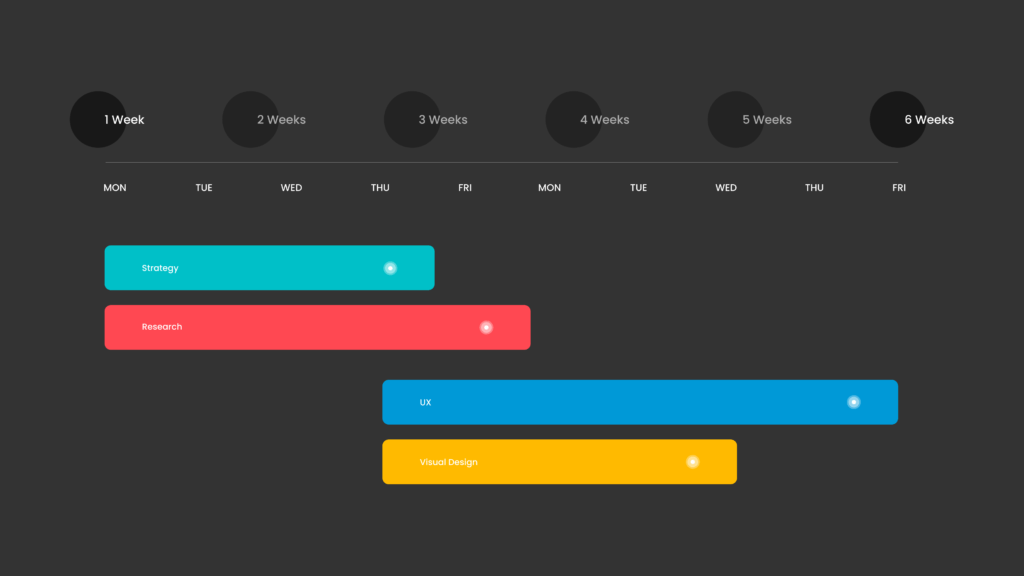
Project Timeline
05.
Competitive Aanalysis
These visuals interpret the qualitative findings using chart types that match the nature of the data (presence/absence matrices, exposure counts, and pillar scoring). Each graphic includes a brief explanation for stakeholders.
06.
Users and Audience
07.
User Personas
These detailed personas provide a deeper understanding of the specific needs, pain points, and preferences of users, guiding the design decisions in the process This user-centric approach ensures that the redesigned UI/UX will cater to the distinct requirements of both personas, ultimately leading to a more effective and satisfyin g user experience.
08.
Customer Experience Map
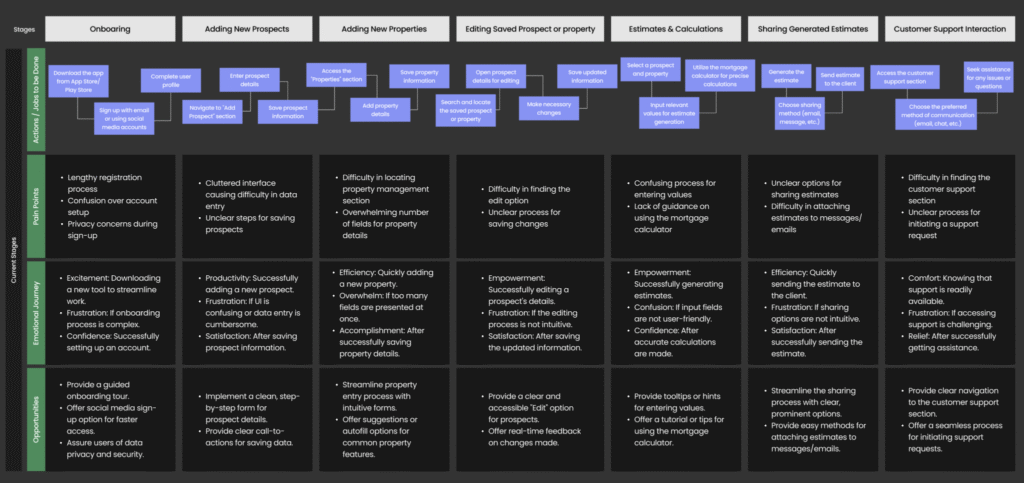
In the process to enhance the user interface and experience of the mobile application, I charted a course through the key phases of user interaction. This User Experience Map offers an in-depth exploration of the user’s path, from initial onboarding to estimate generation and beyond. Delving into actions, pain points, emotional states, and opportunities for optimization, this map serves as a compass to guide us towards a more intuitive, efficient, and satisfying user experience. In the map below we navigate through the course of onboarding, prospect and property management, estimate generation, and client interactions, all with the aim of redefining the way users interact with the app.
09.
10.
Redefining the User Experience for Lincoln Title
Onboarding
The updated login page employs a cleaner layout with intuitive form fields, providing clear instructions for users.
11.
Property/Prospects screen experience Enhancement
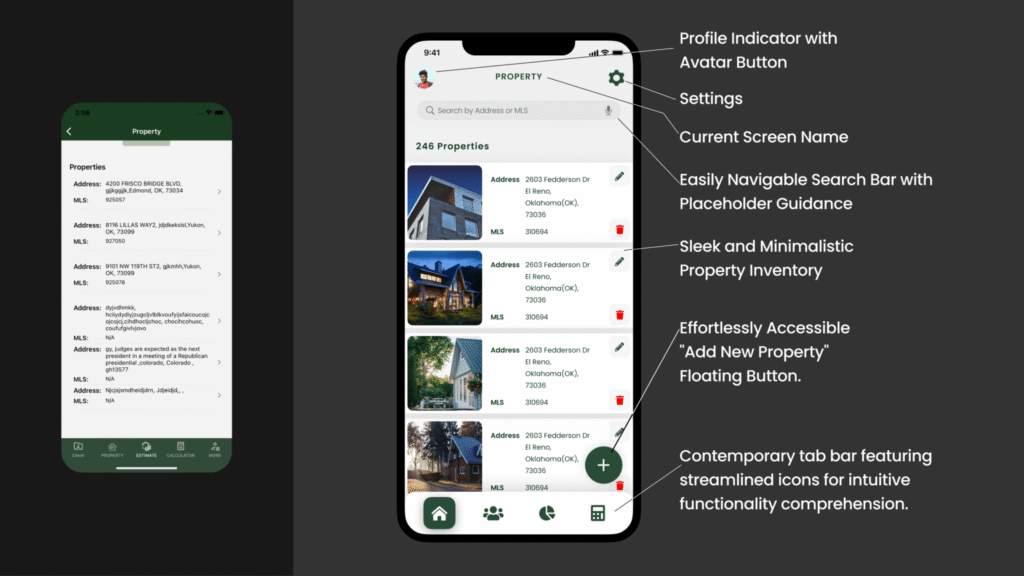
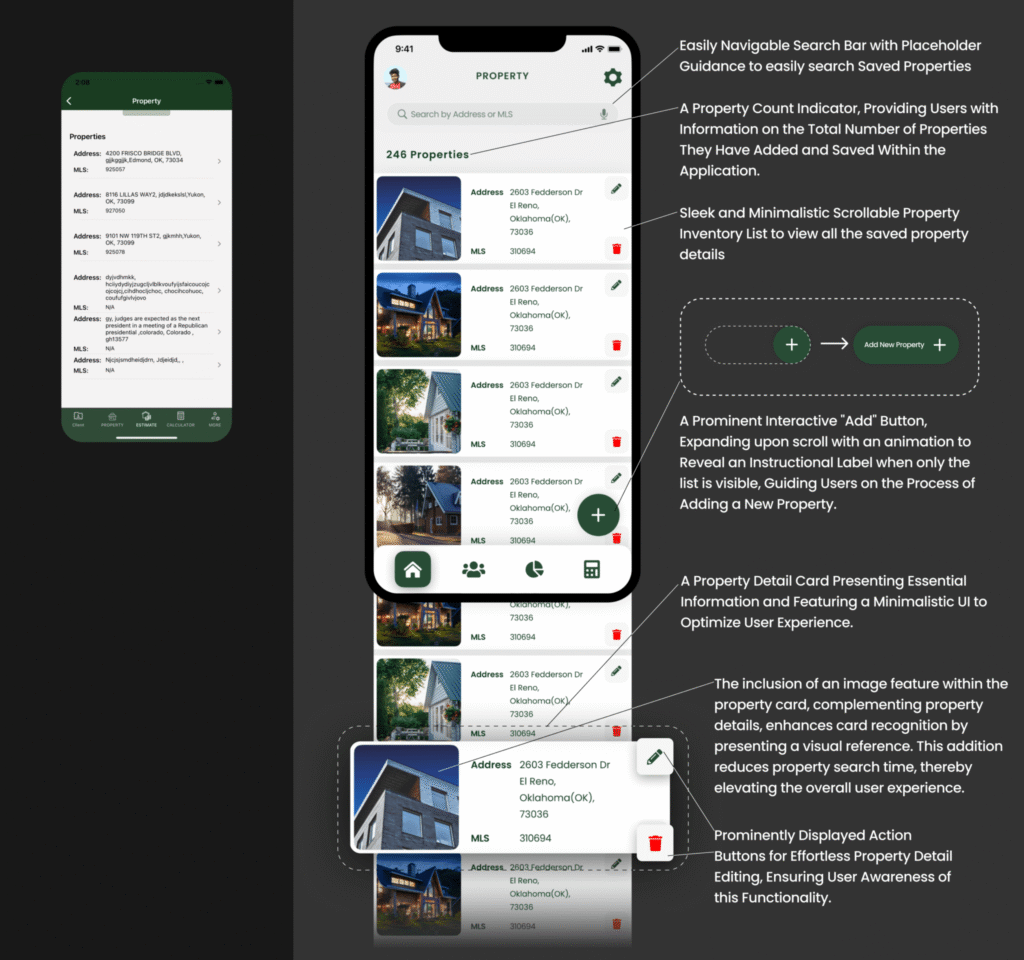
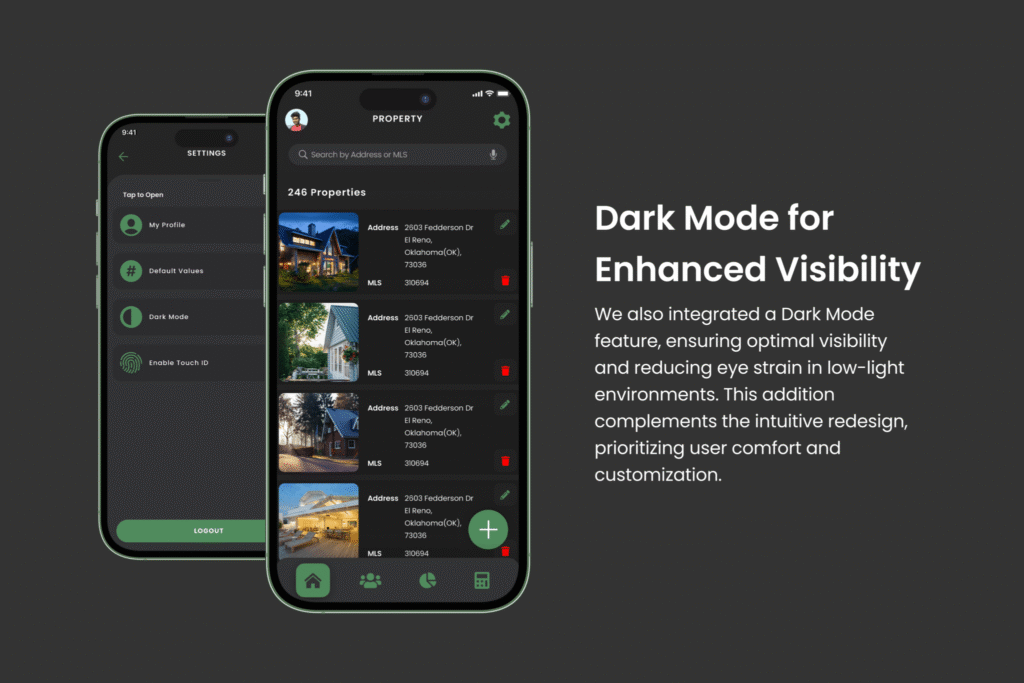
Since property and prospect screens have similar user flows for adding and editing properties and prospects, these are optimized for a seamless user experience. With features like a navigable search bar, property count indicator, sleek inventory list, interactive “add” button, detailed property cards, and prominent action buttons, users can efficiently manage their properties. Additionally, the inclusion of property images further enhances recognition and expedites property search, ultimately elevating the overall experience.
11.
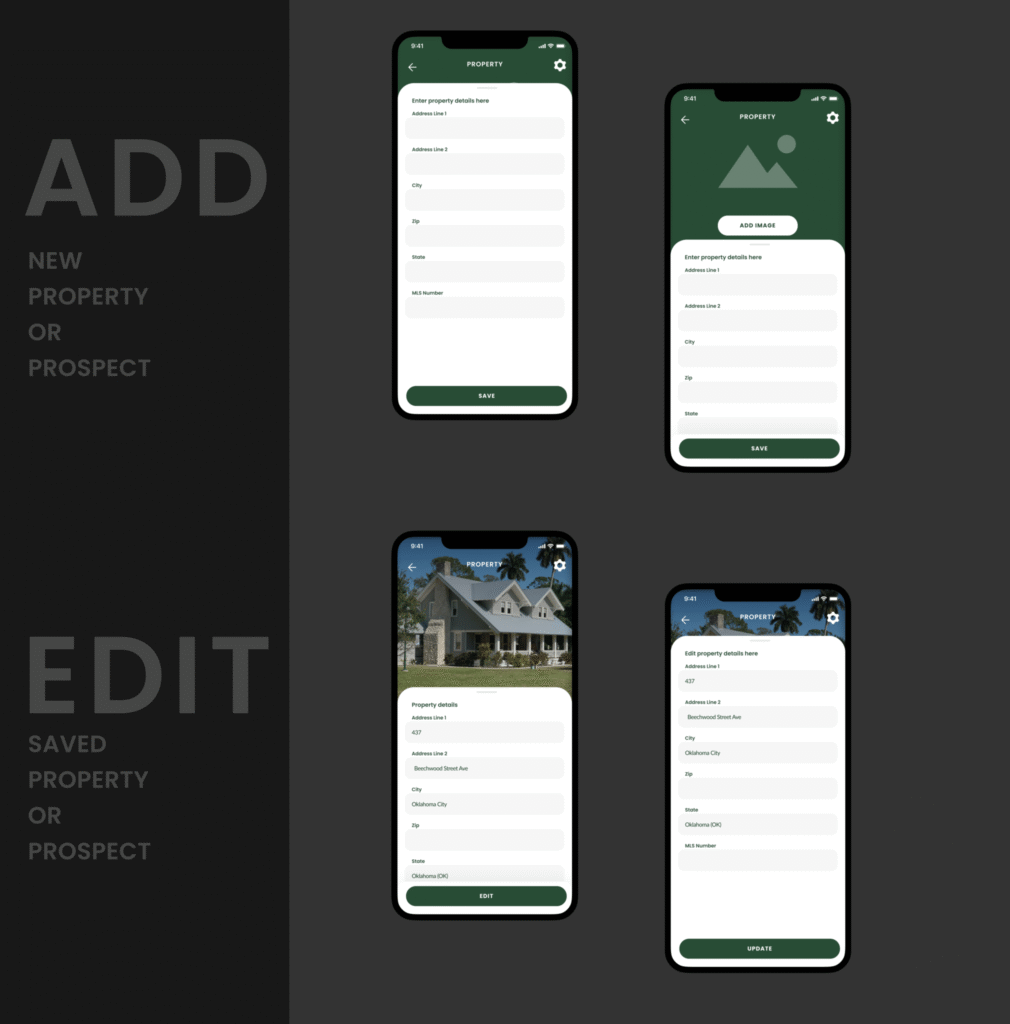
Add and Edit Property/Prospect screens
The revamped Add and Edit screens for properties and prospects offer a more intuitive and streamlined experience. With improved navigation, clearer labels, and a user-friendly layout, users can effortlessly input and modify details, enhancing overall usability and efficiency.
12.
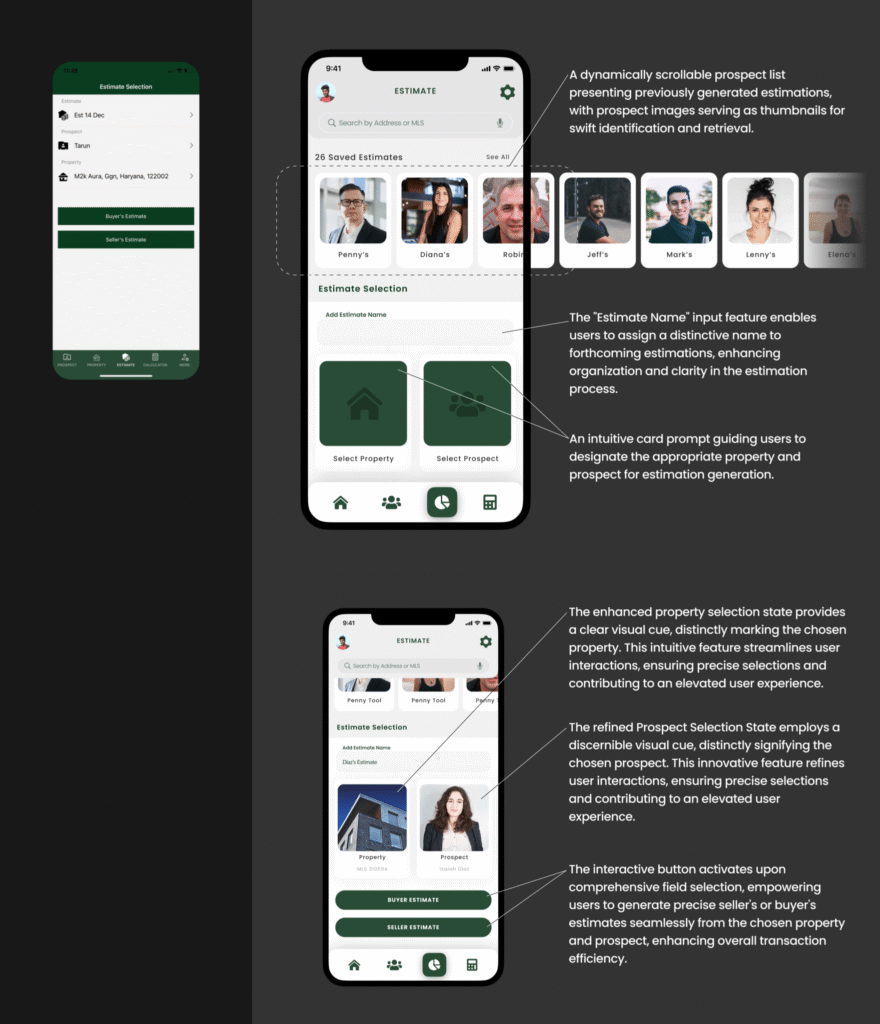
Estimate Selection Screen
The new estimate selection screen offers a seamless experience. It includes a scrollable prospect list with thumbnails for quick retrieval. Users can assign unique names for future estimations, ensuring organization. Intuitive prompts aid property and prospect selection. Enhanced states provide clear cues, streamlining interactions. An interactive button activates upon comprehensive field selection, enabling precise estimate generation and enhancing transaction efficiency.
13.
Conclusion
Through meticulous research and iterative design, the revamped mobile application promises a significantly improved user experience. The application now seamlessly integrates with the workflows of Realtors and Loan Officers, addressing their pain points and enhancing efficiency. By focusing on intuitive navigation, precise calculations, and responsive design, the app aims to become an indispensable tool in the real estate industry.
The development journey involved continuous feedback loops with users, starting from wireframing to high-fidelity prototyping. This iterative approach allowed us to refine the interface based on real-world usage and preferences. Usability testing played a pivotal role in validating design choices and uncovering any remaining areas for improvement. The result is a product that has been fine-tuned to align perfectly with the expectations of its user base.
As technology evolves, so too will the needs and expectations of users. The redesigned app is built with scalability and adaptability in mind. Its responsive design ensures a seamless experience across devices, from desktops to mobiles. This future-ready approach positions the app to stay relevant and continue providing value in an ever-changing real estate landscape.
In conclusion, the comprehensive redesign of the app represents a milestone in user-centered design. By leveraging user research, competitive analysis, and iterative refinement, the application now stands as a testament to the commitment to providing a superior user experience. The enhanced interface and features are poised to revolutionize how Realtors and Loan Officers manage estimates, calculations, and client interactions, establishing the client’s mobile app as an invaluable tool in the real estate industry.